HELEN
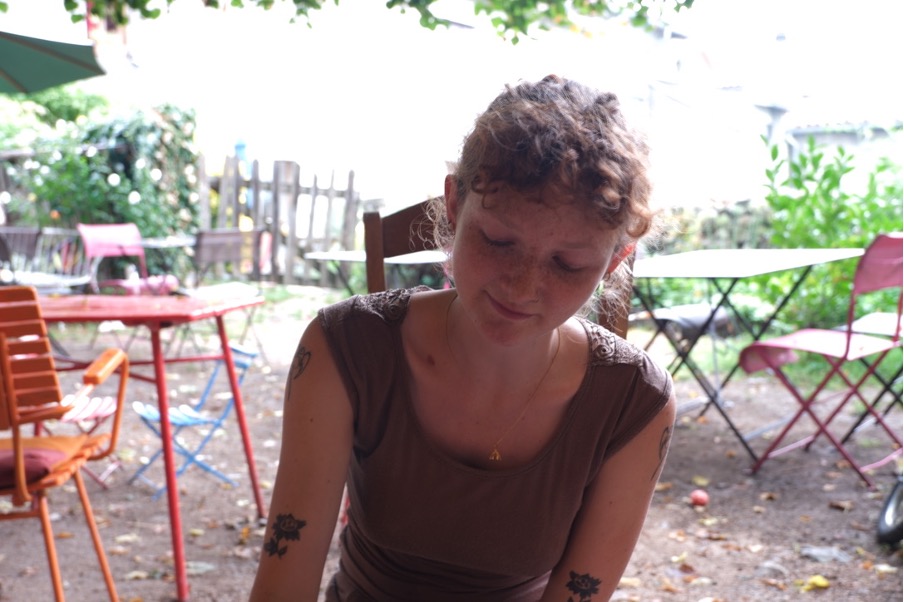
When was the last time you saw a shepherd who wasn’t an older man with a stick and a thick local accent? That familiar image — solitary, weathered, rooted in ancient traditions — is deeply embedded in our imagination. Shepherding is one of humanity’s oldest professions, born of the shift from nomadic life to settled communities. Yet while it may seem to some, forgotten, it has quietly modernised.
Here in the French Pyrenees, especially in the Ariège, shepherding is attracting a new generation. Today’s shepherds are often young, educated, well-travelled, and digitally connected. They choose this life deliberately, to escape the confines of the working world of today.
My friend Helen is one of them. A 20-year-old French-Canadian, she is training as a shepherd in the Pyrenees and hopes to specialise as a vachère, working with cattle and cheese production. She arrived in the Ariege almost by chance, after spending 18 months hitchhiking solo through Eastern Europe and Northern Africa. Before that, she had been academically focused on sexology, a field she may return to one day. She is bright, determined, and widely travelled, and has chosen the French Pyrenees for her training, hoping to return to Canada as a cowgirl within the next few years.
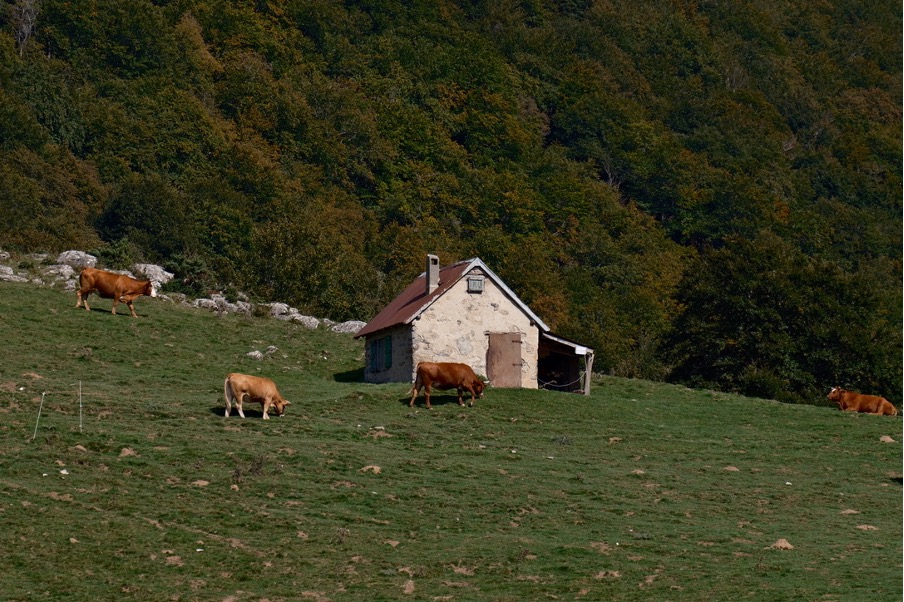
In places like Ariège, livestock remains central to local life: sheep and cattle sustain food production and support entire communities. We are lucky to live in a place where most meat and dairy production remains, not only local, but also organic and free-range. Though over 70% of animals globally are factory farmed, mountain pastoralism persists as a more traditional alternative.
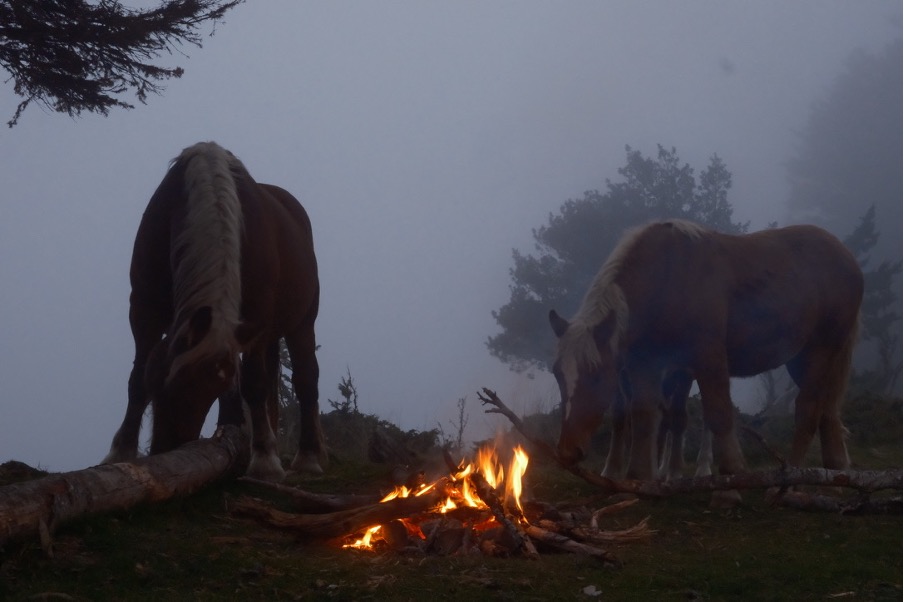
Since the creation of the shepherding course by the French State in the year 2000, it has become an increasingly attractive job to young people, especially since the benefits of living in wild and removed spaces have become more apparent. This yearlong course involves six months spent in the mountains during the ‘estive’ season, which generally extends from the end of May to the beginning of October. You may have heard of the ‘transhumance’, which is the long journey shepherds, and their cattle make into the mountains to regain higher pastures.
These six months are hands on for shepherding students; you work alongside a sheepdog, a crucial companion to help guide, herd and protect. With the responsibility of between 800 to 1300 sheep — roaming over 20 to 100 hectares of mountainside — sheepdogs are indispensable. Although there are many kinds sheepdogs, here, we are famous for our Pyrenean Mountain dog, a large white and fluffy, yet lethal, mountain sheepdog. These dogs have been bred as protectors, they are strong, smart, and independent, living amongst livestock their entire lives (until retirement) and consider themselves a part of the herd. They are known for their aggressive harassment techniques to scare off predators, specifically bears, and are armoured up against attacks with their thick coats, skull and teeth.
Recently, these dogs have been introduced to farmers and shepherds in Chile and Argentina as a means of protection for their sheep against pumas, and to reduce the shooting of pumas by farmers.
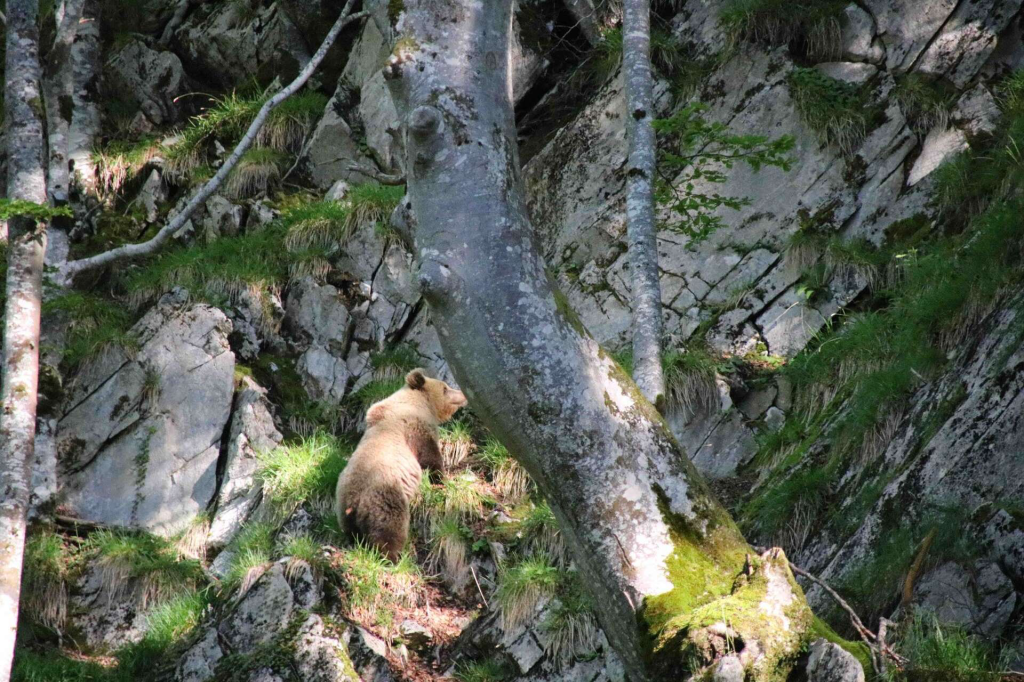
In the French Pyrenees, our main predators are bears, and only recently, wolves. Although wolves are, so far, extremely rare, the Ariege considers bears to be common, with the largest concentration in the entire Pyrenean range, about 90 to 96 out of an approximate 120 total.
In 1996, brown bears were translocated into the Pyrenees from the Slovenian Dinaric Alpes to save the Pyrenean bear population from extinction. Sadly, the last indigenous Pyrenean bear died in 2004, and since then, the Slovenian bear numbers have grown significantly. While conservationists still consider this as a success, many shepherds experience it differently.
Livestock attacks have directly increased alongside the rising bear population, placing emotional and economic strain on those who depend on their animals. The genetic difference between the Slovenian and the Pyrenean bears has altered the natural cycle of life in the mountains, with Slovenian bears now taking full advantage of the accessibility to livestock, one they did not have before in the rugged and exposed Slovenian mountains.
Although the Pyrenean bear used to be common, they were not as violent nor as sporadic as the Slovenian bear. It is said that the indigenous bears were careful with the chaos they caused to surrounding animals, killing only 1 or 2 sheep per season, eating the entire thing, and even burying or hiding the body when finished. Today, the bears consider livestock as snacks, and return to pastures daily, killing multiple and sometimes only eating a singular leg. Not only are the deaths and disappearances of livestock incredibly destructive to those who care and depend on them, but attacks also traumatise the animals, often leaving them incapable of producing milk. As a protected species, bears cannot be harmed, leaving shepherds with limited options beyond deterrence.
The issue remains politically and socially divisive, especially among the agricultural communities who were excluded from the original reintroduction decisions. This led to numerous demonstrations throughout the country, both peaceful and violent. The issue remains politically and socially divisive, and graffiti slogans of ‘Oui à l’Ours’ or ‘Non à l’Ours’ can be noticed all over the Ariege.
I never truly understood the ‘anti-bear’ movement until I had friends in the shepherding world.
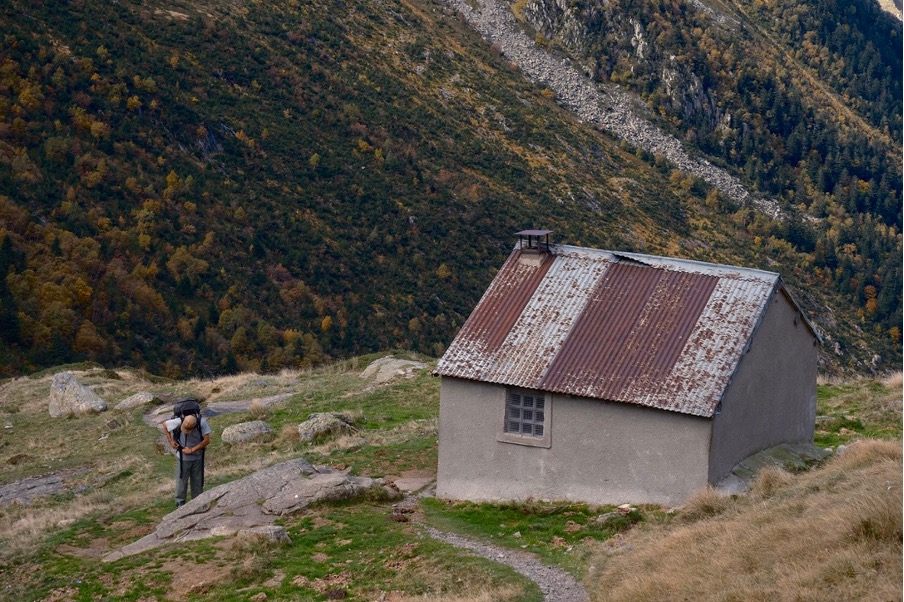
Shepherds face huge adjustment in the wake of the rising bear population, one that is generally only understood by those within its community. They have always had to work around the clock and cope with physically demanding manual labour, sometimes walking up to 20km a day with high altitude gain, and sometimes live in extreme isolation. Beyond predator management, shepherding also requires deep ecological knowledge — of plants, terrain, weather, and animal health. While veterinary help is accessible when needed, much responsibility rests with the shepherd and their understanding of the land.
Today, they are expected to adapt. Round the clock danger requires additional help for around the clock monitoring, fencing to keep the livestock in one place at night to reduce risk, more dogs, more jobs as shepherds, mountain police, ‘effaroucheurs’ to help keep bears away, and so much more. During the night you are always on alert, and the dogs will bark most nights drawing you out of the hut and onto the hills to help ward off any danger. It is far more dangerous for shepherds now, who are putting themselves at risk to defend their animals. Bears are not afraid of humans, and we are no longer the largest predator in these mountains.
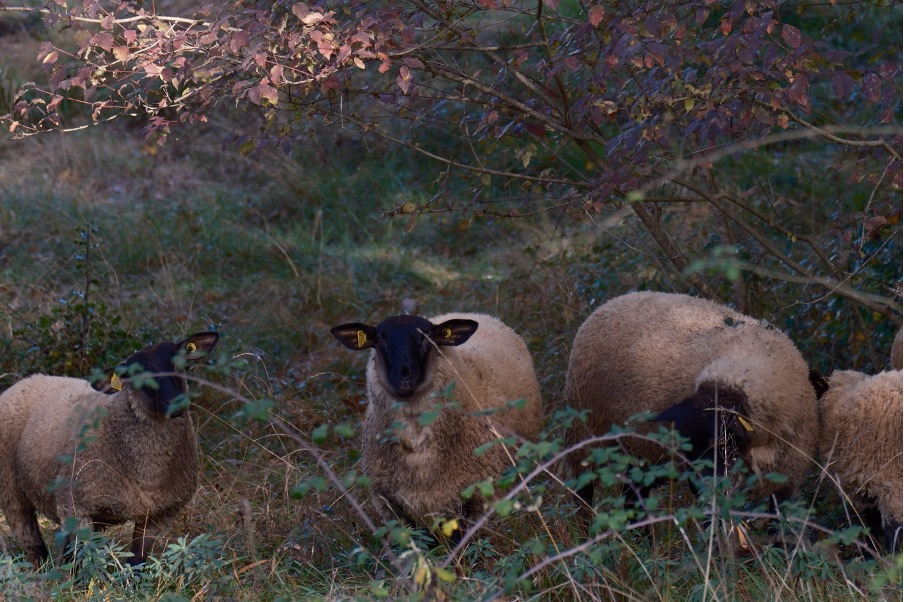
The reintroduction of bears into the mountains as part of a larger conservation project, and to save and diversify Pyrenean biodiversity, doesn’t sit well with shepherds and farmers here in the Ariege. They consider that if the bears went extinct, despite our best efforts to save them, then there is reason to it, and as sad as it is, it is unnatural to create a ‘mirage’ of wilderness and artificial biodiversity in wild spaces that disrupts the natural, and human pastoral, balance.
There is, alongside the presence of the bear conversation, a larger debate as to the natural balance in sheep ‘farming’ in the mountains, as they are part of a larger human organism which has, over the years, drastically multiplied their numbers, disrupting the growth of trees and plants, and therefore the presents of wild animals, birds and insects.
So, shepherding in the Pyrenees today is neither relic nor romantic myth. It is an evolving livelihood — rooted in tradition, shaped by conservation politics, and increasingly chosen by young people who see value in working closely with land and animals. Although it remains hugely physically and mentally intense, it is no longer as isolating as it once was. Rotational systems allow time off in the valleys, and modern communication keeps mountain life connected to the wider world.
Links that may be of interest:
ARTE: Pyrénées, vivre avec l’ours: https://www.youtube.com/watch?v=5jvk6bmPURQ
REPORTAGE. Sur les traces de l’ours avec les bergers de l’Ariège: https://www.ouest-france.fr/environnement/biodiversite/reportage-sur-les-traces-de-l-ours-avec-les-bergers-d-ariege-cafb63ae-df5e-11ec-b7a2-40c4f481b720
 SED Artist
Leave a comment