Conceptual is for the artists as philosophy is for the writers.
In all art forms, it turns out, there is a certain dichotomy between the aesthetic, and the conceptual. This isn’t only a dichotomy that is faced by the artists, the makers, the performers, their creators, but also, naturally, by the audience, the public, the viewers, the listeners. A divide so strong, rarely finds a safe in-between, and most of the time, there is an agreement that in fact, there shouldn’t be one. There is no point sitting in between ideas, without ever fully throwing yourself into one or the other, no point spreading yourself too thinly, not truly investing yourself in your ideas. Or is there?
Although I dislike admitting in, I fear I am one of those artists who sits in between the two. Aesthetic art is not something I greatly enjoy learning about, but love it in my home and my surrounding environment, and love making it. However, my version of aesthetic art, as I have mentioned before in previous blogs, is always constructed on philosophy, on an idea, a concept, that is thrown around at large, that is lived by me, through me, and therefore through my art. My art as a whole emits my concepts and my ideas, what I want to say and share with the world, my audience, but really, mainly, myself. It is subtle though, and it rarely, if ever, leans politically. That is not because I don’t value conceptual, intellectual or political art, on the contrary, it is my favourite art form, but it is not the one I enjoy creating the most (or not the one I have yet learnt to enjoy creating). It is magnetic though, and I cannot dismiss the pull I feel, as I am sure many artists do, into pushing the boundaries and creating something, a work, a piece, a performance, that is intriguing, important, and lies within many realms of discourse. It is through concept art that I feel we progress as society, as a collective group of people, and as individuals. With conceptual art, there is always something to talk about. There is always someone who complains about it, moans about it, loves it, hates it; there are always words being thrown at people, and others there to catch them, to listen to them and to counter them. This form of art, I think, is the most stimulating form of creation and observation, which creates an unharmonious dance like discussion and existence. The reactions of the audience, and those who surround it, command it, watch it, see it, hide from it, disagree with it and ignore it, are a part of the artwork itself, and one of the reasons for its creation.
I think I must add, that when I am talking of art here, I am encompassing all art forms, not solely of painting and drawing, but also of dance, performance, music, film, and anything else… Anything in which this dichotomy exists, that of beauty or that of speech, and sometimes, that of both. It is like in Call me by your name, when the father says, is it better to speak or to die? That is the purpose of art, conceptual art at least, to speak on the things that other people let die. Because we still all die, by speaking, you are doing both, because you speak and then you die, whereas if you do not speak, and simply die, then you miss out on the reason that was worth dying for in the first place. If you did not speak, did you really die?
Looking back on recent art history and current contemporary art, it is not the pretty art that meant not a thing that stands to the most to us. We as humans, naturally in our lives seek meaning, and that in everything we do. We seek meaning in the way we live, in the way we love, we seek meaning in the way we cook, and in the way we eat, the people we bond with we intend to do so meaningfully, and the conversations we have with others and ourselves. We do not look solely for beauty, although we also do that, it seems that beauty is more of a modern concept, a materialistic one which has been created for us, in our vanity. So no, it tends not to be the pretty painting that you or we, as an entire human existence, remembers the most, nor discusses the most, or changes our lives the most… usually, it is the work of art that pushed that boundary, that shocked you, that tested something new… it is that which stood out the most because it was the most unusual, the most surprising, and because it struck a cord with that humanity deep down below.
For example, we do not remember Picasso or Braques for their beautiful and technical drawings of their early careers, which they continued to be great at and were just as beautiful as they were good; no, we remember those painters for inventing Cubism, a style of art which seems to have stayed faithful to the early 1900’s and which pushed art styles and genres into new and flourishing directions. Although cubism is a visual style, one that may by characterised as aesthetic, it was more than that.
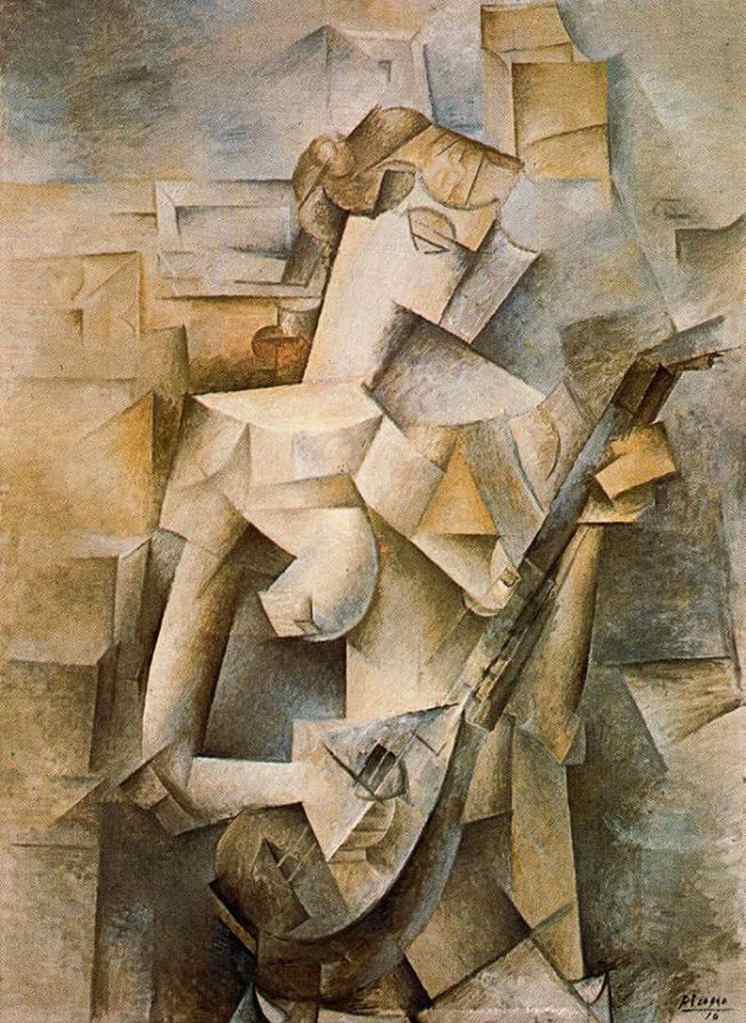

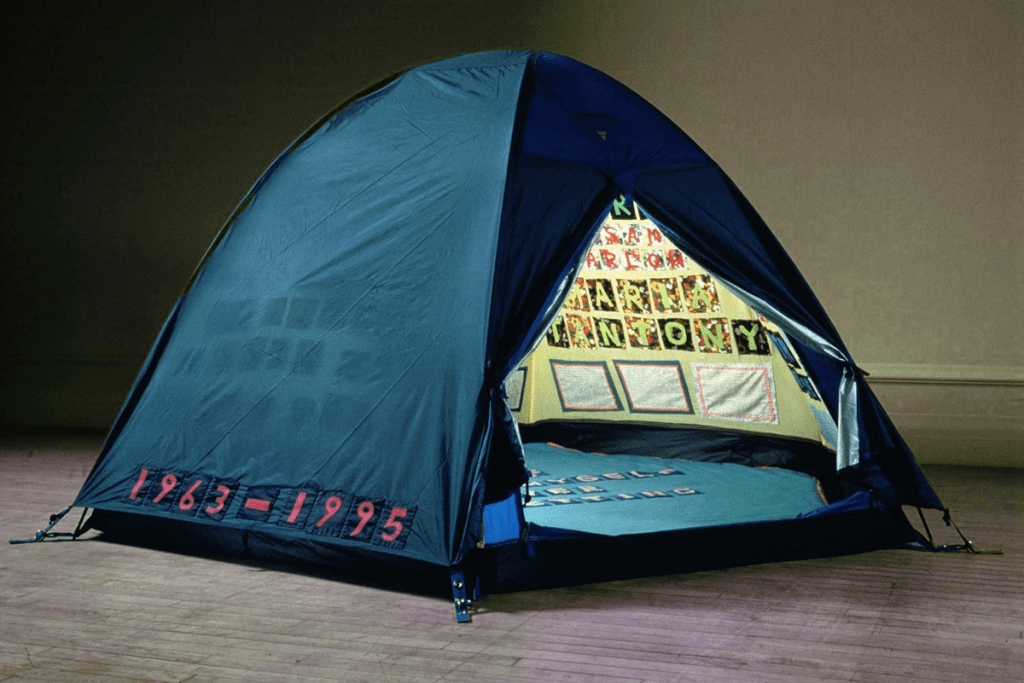
Cubism was born from the rejection of naturalism, and traditional painting techniques in perspectives, modelling and foreshortening. It was about the judgement, the risk, it was the concept, born into the aesthetic of style, that created an explosion in the art world. No bomb is ever safe, nor is any good idea in the arts… they are all a great risk, and their consequences are irreversible. I think cubism is conceptual within the aesthetic, or even aesthetic within the conceptual, but if we move beyond that, into solely conceptual, we have works for example like the wonderful Tracy Emin’s tent “Everyone I have ever slept with” which is quite literal a tent, with all the names of the 100 or so people she has ever slept with printed on the inside. The significance of the tent requires more depth than I have the word count to go into, but overall, it is a feminist approach to a controversial subject, made humouristic and incredibly personal.
More famously, you will undoubtable have heard of the painting of a pipe with stated below: “Ceci nest pas une Pipe”. This is conceptual art. Really, conceptual art is the art world version of philosophy for writers. It interrogates that which we know, or think we know, or do not know, or think we do not know. It puts out into the world something against which all should go against it, it creates confusion, and births questioning and reflecting, and from there… it becomes whatever we want. In some ways, it is similar to melting sand, and forming glass. You take one thing, in the thousands, and heat it up until it is malleable and see through, and you shape it in whichever way you want. There is your conceptual, there is your philosophy.

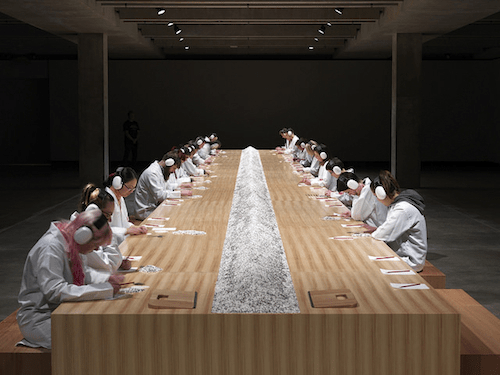
Other examples of conceptual art, external to painters, might be the extraordinary works of Marina Abramovic. She is one of the best conceptual artists and performers of this generation, if not most generations. She worked on a large body of work with her former partner, also an artist that explored the complexities of human relationships, and that I really recommend you check out. Aside from these though, she has created masses of works, including “Counting the Rice” in 2015 and “Sleep” in 2001. Both of these are collaborative works. “Rice” is created inside a basement, where everybody wears lab coats and sits at a large table counting grains of rice, the public is encouraged to join in, although a minimum of 6 hours is required from them. The work aimed to develop the public’s endurance, concentration, perception, self control and willpower, allowing them to stretch their physical and mental limits.
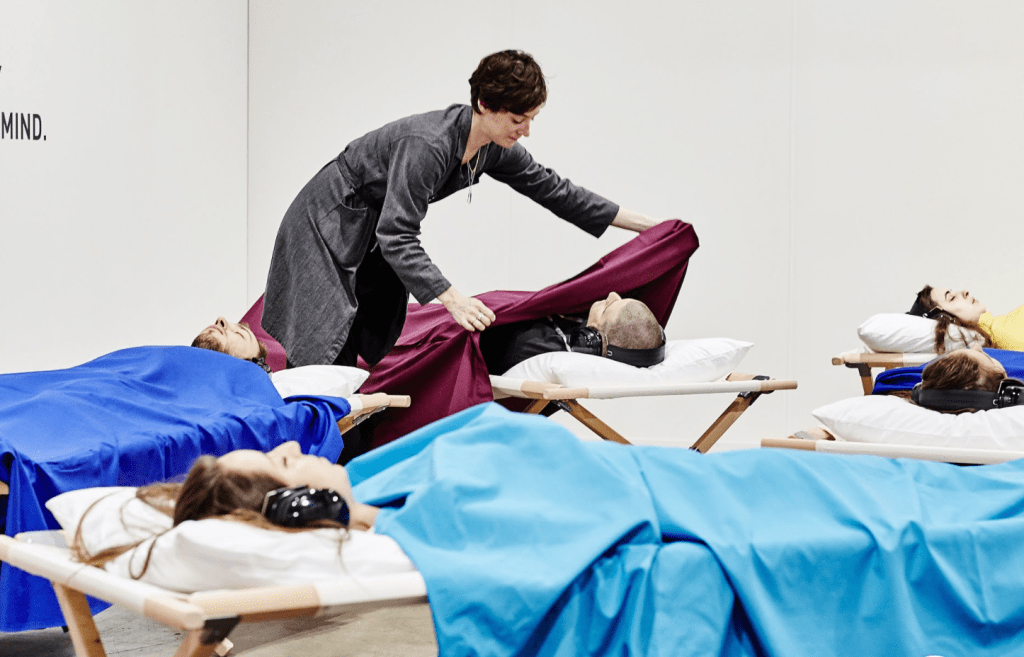
“Sleep” was a more simple performance, where the public, including herself, are encouraged to get into bed, in the gallery, and put on the given headphones and fall asleep. It is a “performative exploration of vulnerability and privacy”. In this performance, Marina invites us to witness our most intimate state, blurring the line between the public and the private. “It is a daring venture into the realms of dreams, where the artist becomes subject and object, challenging our perception of what is personal and what is performative”.
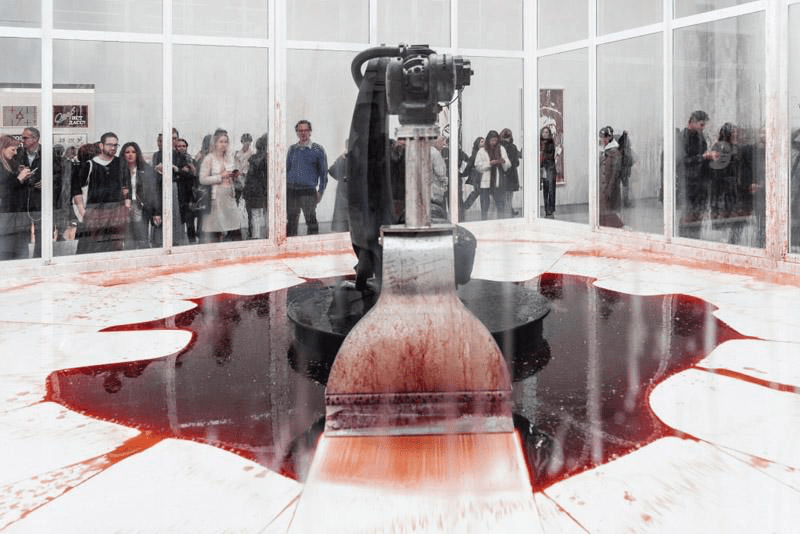
This is not always the kinds of work that the general public enjoy. Another example, which I am sure you have also heard of, and was far more popular amongst the viewers, was called “Can’t help myself”. It consists of a robotic arm that† continuously sweeps blood like fluid back towards itself, in an attempt to contain it, and save itself. Over the years, the robot gets more and more tired, doing the same repetitive action, to no good end, and sadly dies. It is a robot, yet in watching it, we personify it and cannot help but emphasise and feel pity for it… for something that cannot even feel. This is conceptual art, and it is very specific to humanity, as it is an allegory for a larger question and perception of life, and death, which seems to inhibit each and every single one of us.
Finally, I must share one last example of conceptual art with you, which demonstrates that it can also be considerably questionable. The artist Carl Andre, in 1966, displayed his pile of bricks in the Tate, starting “works of art don’t mean anything”. His work, a simple pile of bricks, is considered the most boring controversial artwork ever. One sort of hopes that conceptual art pushes limits in controversial and exciting ways; you expect obsene depictions of sexual taboos and crazy philosophies, you want to laugh and scoff and then sit in silence as the meaning of the work hits you and spins your brain around as you sit and do not move an inch. You certainly do not expect to be bored, and yet, in his creating of bricks, he succeeded in controversy both for and against his own creation, because he is in fact saying something, and doing it. He is also contradicting himself, because if artworks didn’t mean anything, then his bricks wouldn’t either, and yet they suggest so much, reminding us of the blandness that does exist in our world. Whilst he has a point, I dislike it, and I don’t think that boring pessimism is somewhere the art world should aspire towards.

 SED Artist
Leave a comment