Upon arrival into south east Asia, one seemingly enters a spiritual sanctuary of the Buddhist religion, where monks become the just another instance of people you see walking around the streets and melting into their environment as naturally as any other.
In Bath, whilst I was at uni, I did come across groups of monks every now and then, preaching their religion and sharing their insights. I actually had such a great conversation with one of them, about the realms that exist within spirituality. He was so peaceful.
I am a spiritual person, not a religious one though. In some ways I believe in reincarnation. I don’t believe in the total absence of life once a person dies, but rather in the redistribution of energy into another life form, whatever that may be (you should read Overstory by Richard Powers, it stumbled through humanity’s intrinsic link to nature in a transformative way). I guess what I am trying to observe here are the similarities with which the spiritual religion of Buddhism has enticed me not for its pillars nor life practises, but mainly regarding mindsets and meditation and the search of the self in the journey to nirvana. I think that loosely, this might apply to all human form really, aren’t we all striving to feel alive and fulfilled in all senses of the ‘self’ ? Once more, I feel I must reiterate how truly little I know about the incredible depths of Buddhism and all religions in general. I know a little here and there thanks to people, travelling, and Jay Shetty.
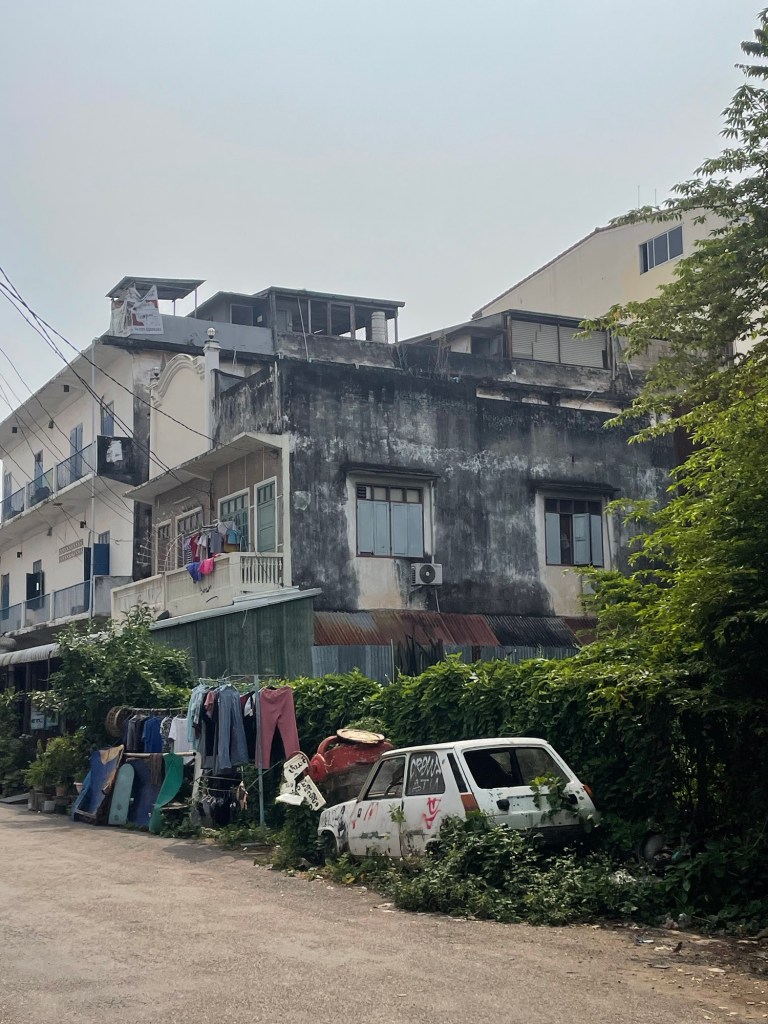
One thing I knew about Buddhism was that their allowed ownership of items was constrained to four items. In fact, in the history of Siddhartha Gautama: The Buddha, “he renounced his princely title and became a monk, depriving himself of worldly possessions in the hope of comprehending the truth of the world around him” (Reitherman, 1999).
I read however that possessions of a monk have increased over the years so as to improve their well-fare, “the possessions […] were not fixed through time, but have gradually increased since the time of Buddha” (Paek, Do-Su, 2003).
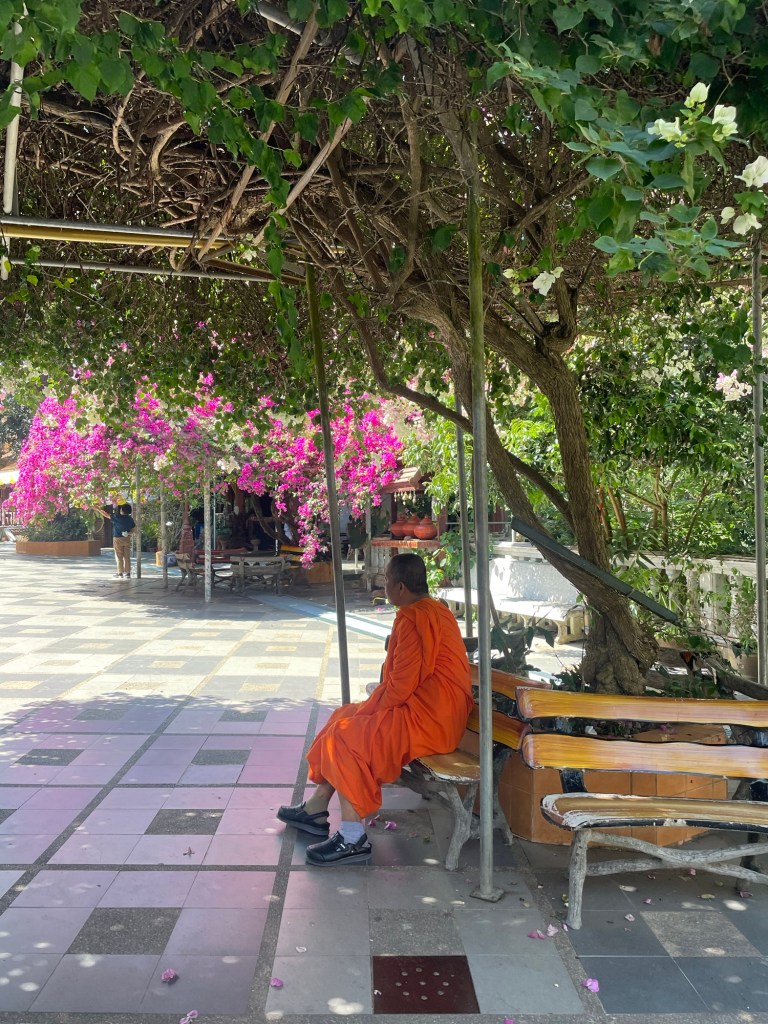
This feels important for me to mention because of the surprise, since my arrival in south east Asia, at the sight of monks defiling past me with the latest AirPods and IPhones, and smoking cigarettes. I admit I have always known very little about the rules or more depthy ideas that a monk should follow, but from what I felt like I had learnt of Buddhism in the west, or my own preconceived ideas of the religion, it seemed like an ironic contrast to what they define themselves to be or what they strive to become.
So this is one of my key remarks here, whereby I know how little I truly understand of Buddhism and have had very little knowledge on the matter, and yet somehow I have seemed able to make up my own ideas of what they should and should not be doing. In my eyes, I guess, buddhism did not allow technology nor addictive substances like nicotine, but as I remark, I am completely wrong.
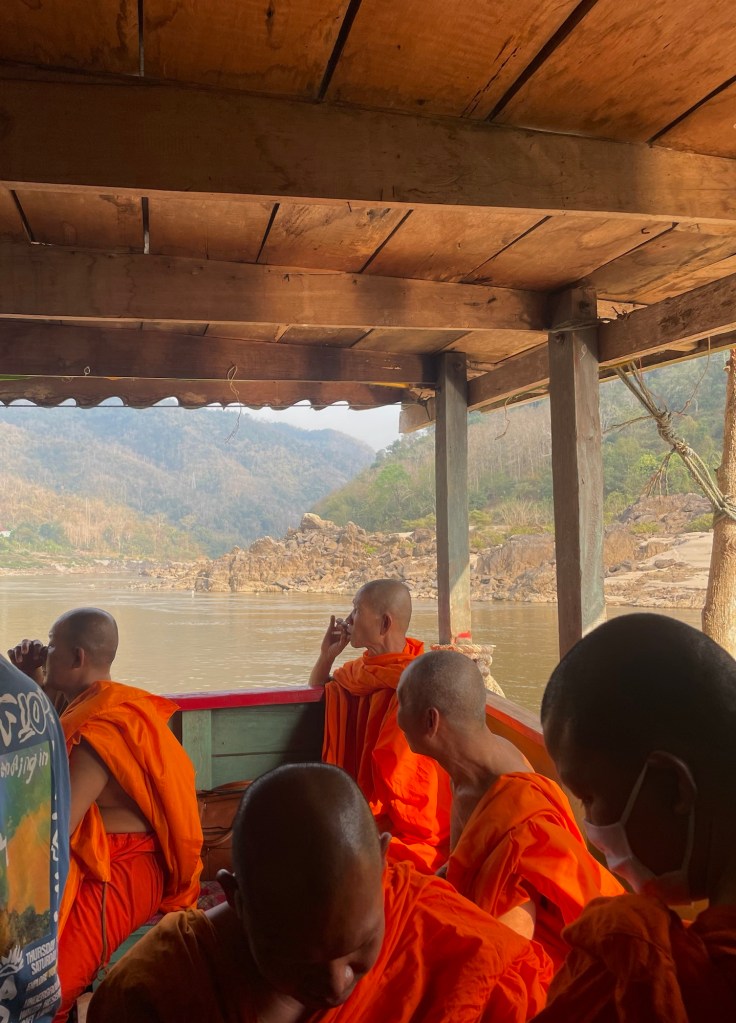
A notable dialogue was created regarding similar topics when we went to the ‘traditional arts and ethnology centre’ about tradition and culture amongst hill tribes here in Laos. One part which captivated my attention discussed tradition and change, explaining how “ethnic communities in developing countries are not frozen in time as historical or traditional icons. In fact they are developing and changing as much as cultures in Europe, North America or even Vientiane, and have been for hundreds of years. Ethnic people in Laos live in cities, own businesses, hold government positions and travel overseas. In rural villages, they have smart phones, use social media, hold frequent town markets and build cements homes. People adapt their lifestyles and traditions to changing circumstances, globalisation and opportunities to improve their future.” There is a lot of power which which we tend to perhaps not attribute enough thought to, but instead fall into pace with the idea that we are more advanced than other cultures and religions. Why ? I’d like to bring this into my next talking point, women. Particularly, women of south east asia in contrast to women from the west.
I form a remarkable number of thoughts and questions when meandering the streets alongside another woman and two men. My most recent remark, nipples, more specifically, ‘Free the nipple’.
Is this a western concept ? Do the women here in Southeast Asia strive for similar liberations regarding the empowerment and desexualisation of their bodies ?
What a tremendous movement this has been in the west in recent years. The act of not wearing a bra has been absolutely phenomenal, and truly has been empowering for women all over. Here though, I remark a difference in the way women dress or perhaps seek empowerment.
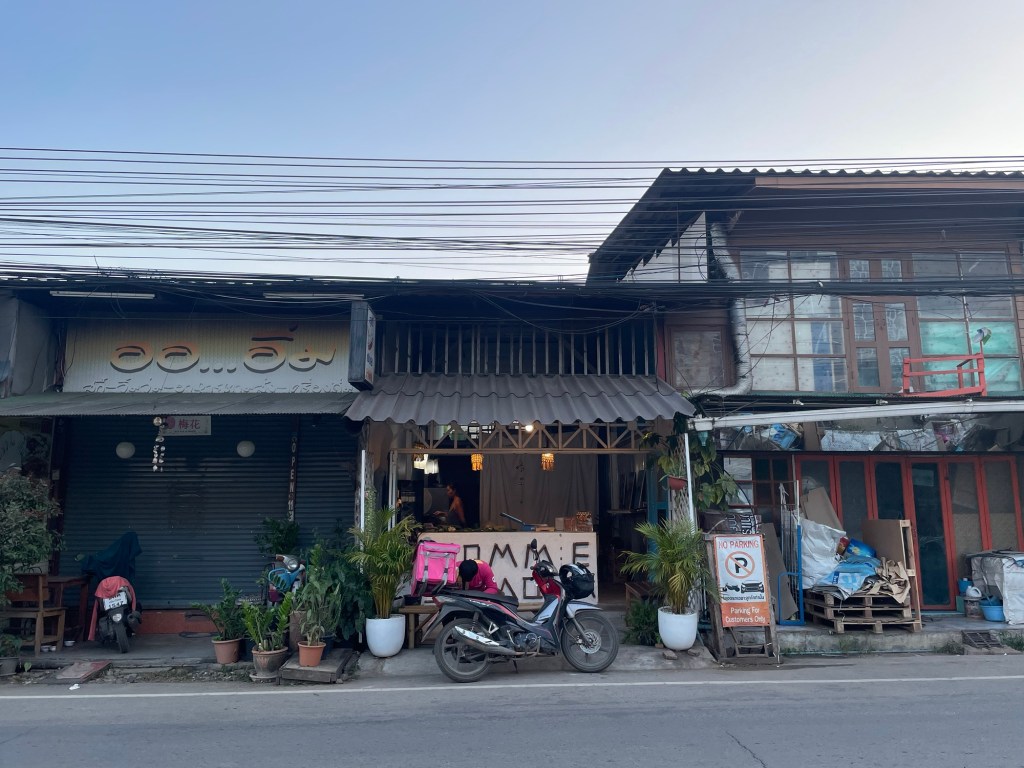
It is noticeable to me that our continents have perhaps felt the need to evolve in ways which the other might not comprehend nor ever need to consider. The absence of a certain type of discrimination or even simple societal creation (like over sexualised female clothing) means that we now strive towards different things, creating a gap between the women where I’m from and the women where I currently am. They do not feel the need to free the nipple, because maybe they never felt that this empowerment was ever taken from them, nor used against them. Back home however, it is exactly that, which is empowering; we are taking back control of something whose control was taken from us.
Once more I have to reiterate how little I know about women’s history in south east Asia so cannot speak of discrimination against women. I am not saying there is none here, simply I think that men and women gender gaps evolved in very different ways and are continuing to take different paths to our own back home.
As mentioned in my previous blog, women here seem to be far less sexualised in their day to day life. Clothes are not created to enhance boobs nor bum, but rather for practicality, fashioned on surroundings and daily tasks.
In western culture, it seems women were sexualised very early on, with clothes and advertisements pushing forwards sexual notions in fashion and normalising it.
Now, our two cultures progress both potentially at a similar pace, but in considerably different ways.
When I see us westerners walking around with our bras off, I cannot help but wonder how the Thai, Laotion, Cambodian and Vietnamese men and women feel ? Do they understand? Is it rude ?
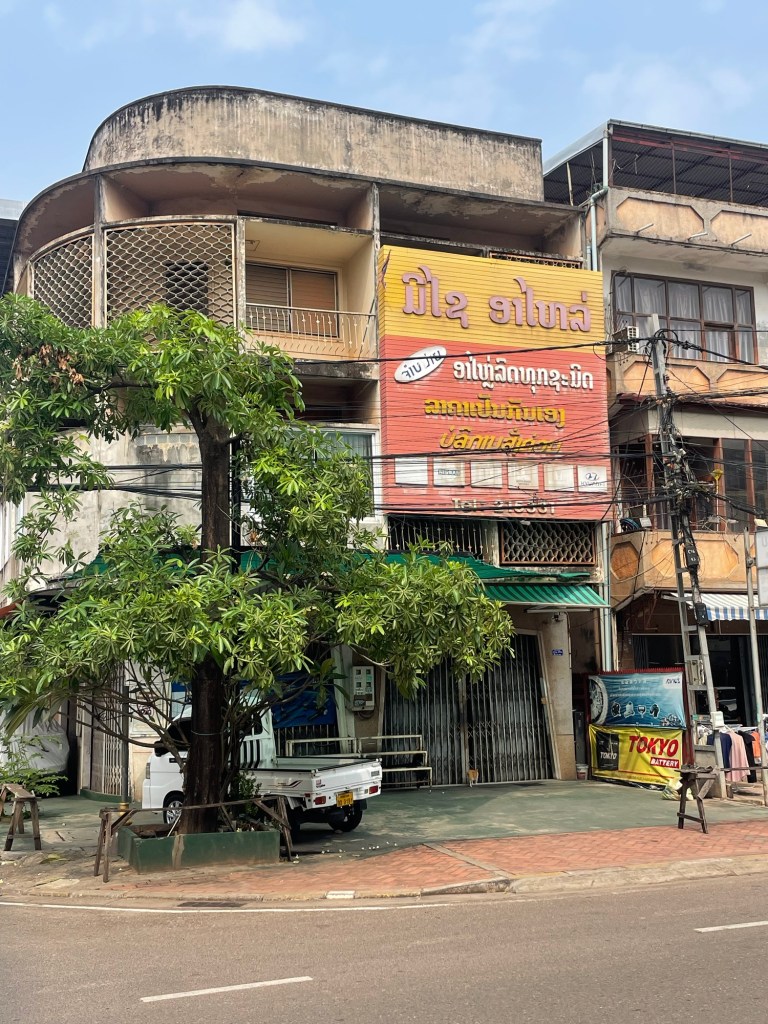
It is evident that our continents have felt the need to evolve in ways which the other might not comprehend nor ever need to consider. The absence of a certain type of discrimination or even simple societal creation (like over sexualised female clothing) means that we now strive towards different things, creating a gap between the women where I’m from and the women we’re I currently am.
So, just like humans have evolved differently throughout the world, I guess it makes sense that women would also evolve slightly differently across continents, countries and cultures, based off their environmental and historical surroundings.
I think we have a need to develop and progress in different areas. It is easy to be from a western country and observe a developing country from a far and define ourselves as superior because of our « quicker » and more « advanced » progression. But actually, we haven’t been through the same historical circumstances, we have been exposed to different challenges and therefore we have needed to develop in different ways because of our different priorities. It isn’t about better, worse or superiority, nor is it about modernity; what would that even mean, all these countries exist in the same moment as the other, how is one judged to be more modern than the other ?
References:
Reitherman; Basics of buddhism (1999) PBS. Available at: https://www.pbs.org/edens/thailand/buddhism.htm#:~:text=The%20Four%20Noble%20Truths%20comprise,to%20the%20end%20of%20suffering. (Accessed: 07 March 2024).
Paek, Do-Su; Korea Journal of Buddhist Studies (2003) A study on possessions allowed for Buddhist community(saṃgha) and a personal monk -focusing on the pāli vinaya-piṭaka, Korea Journal of Buddhist Studies. Available at: https://journal.kabs.re.kr/articles/article/9MYv/#Abstract (Accessed: 07 March 2024).
 SED Artist
Leave a comment